
Product Description
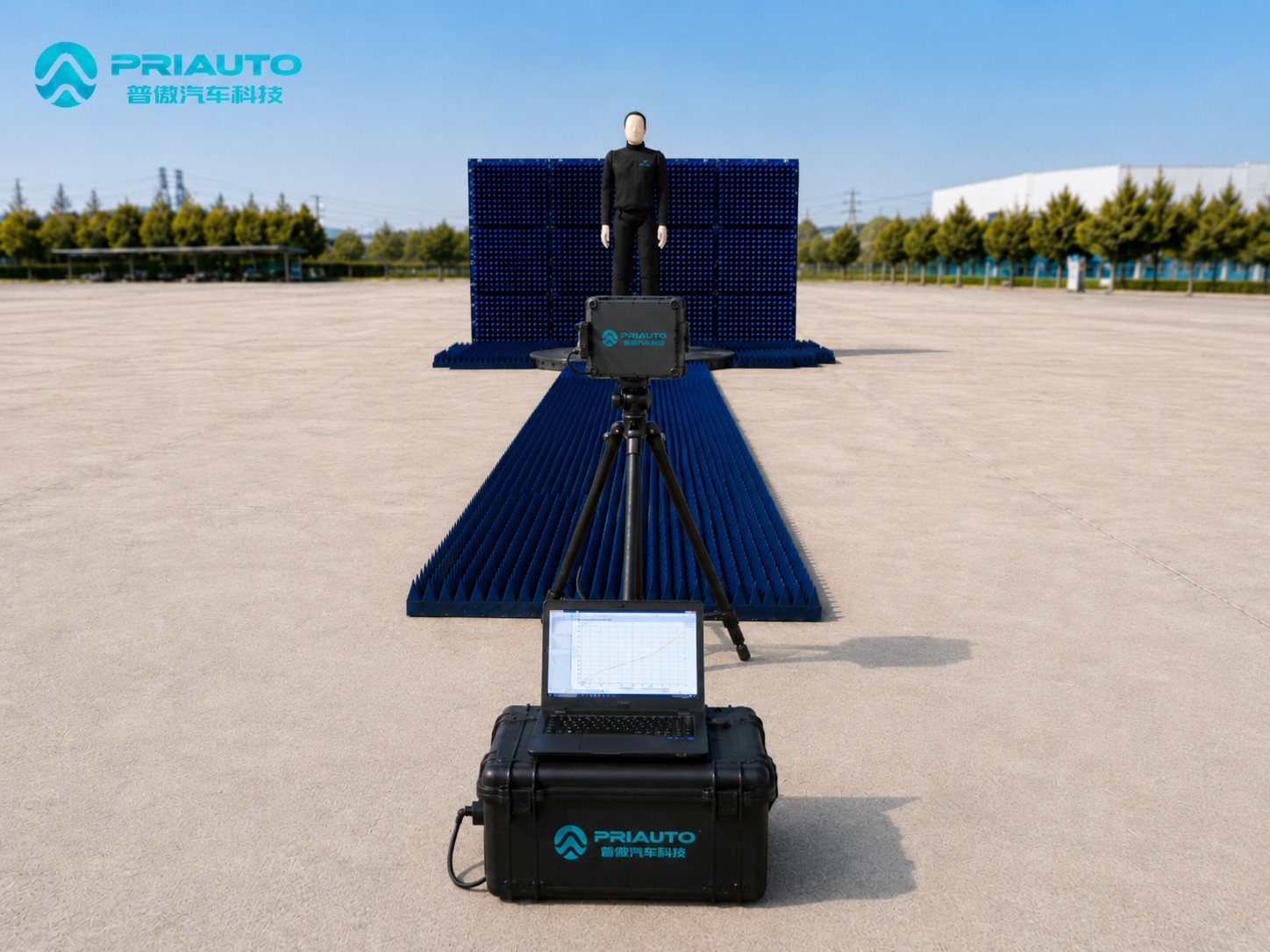
The Radar RCS Measurement System is designed for radar cross-section characterization and verification of ADAS test targets under a fixed-distance and variable-angle measurement configuration. It provides a repeatable measurement solution for evaluating the radar reflection characteristics, angular response and consistency of surrogate targets used in active safety and autonomous driving testing.
During testing, the distance between the automotive radar sensor and the target remains fixed. The target is mounted on a high-precision rotary platform and rotated continuously or step by step according to predefined angular intervals. Radar echo responses are acquired at different azimuth angles, enabling the generation of multi-angle RCS curves and the extraction of characteristic RCS values.
The system is applicable to pedestrian targets, bicyclist targets, powered two-wheeler targets, passenger vehicle targets, roadside guardrail targets, construction-zone targets and other roadside object surrogates. It can support RCS verification of ADAS test targets covered by the ISO 19206 series, and can also support radar cross-section measurement, angular response characterization and measurement uncertainty evaluation required in target calibration procedures such as JJF 2322-2025 and JJF 2323-2025.
Configuration
The system includes:
- Automotive radar sensor
- Industrial data acquisition computer
- High-precision rotary platform
- Target mounting structure
- Radar absorbing materials
- Radar data acquisition and analysis software
- Positioning and alignment fixtures
- Optional calibration reference targets
- Optional measurement uncertainty evaluation module
Key Features
The system adopts a fixed-distance and variable-angle measurement method. The radar sensor remains stationary while the target rotates on the rotary platform, allowing radar responses to be collected at different azimuth angles under consistent distance conditions.
The rotary platform provides positioning accuracy up to 0.2°, supporting high-resolution angular RCS characterization and repeatable multi-angle measurements.
The system supports both continuous rotation and step-by-step angular measurement modes. Users can define angular intervals, measurement ranges, sampling parameters and data acquisition procedures according to different target types and test requirements.
Radar absorbing materials are used to reduce environmental reflection interference and improve the reliability of measurement results. The target mounting structure supports stable installation and repeatable positioning of different ADAS test targets.
The system can be used for:
- Multi-angle RCS curve measurement
- Characteristic RCS value extraction
- Target radar reflection consistency verification
- Target development and performance comparison
- Calibration support for ADAS test targets
- Measurement uncertainty evaluation
- Verification of radar reflection properties for ISO 19206 series surrogate targets
Technical Specifications
Measurement configuration: Fixed-distance, variable-angle radar RCS measurement
Rotation mode: Continuous rotation or step-by-step angular positioning
Rotary positioning accuracy: Up to 0.2°
Measurement object:ADAS test targets and roadside object surrogates
Applicable target types:Pedestrian targets, two-wheeled vehicle targets, passenger vehicle targets, guardrail targets and roadside facility targets
Data output: Radar echo response, angular response curve and RCS characterization results
System components:Automotive radar, industrial computer, rotary platform, target fixture and radar absorbing materials
Application standards:Supports RCS verification for ISO 19206 series ADAS test targets
Calibration support:Supports JJF 2322-2025 and JJF 2323-2025 related RCS measurement and uncertainty evaluation requirements
Typical Applications
- RCS characterization of pedestrian targets
- RCS measurement of bicyclist and powered two-wheeler targets
- Radar response verification of passenger vehicle targets
- RCS testing of roadside guardrail and road facility targets
- Angular radar reflection consistency evaluation
- Target comparison during product development
- Calibration and metrological verification of ADAS test targets
- Supporting evidence for target compliance and quality control